How old is it? Dating a piece by its label
Published
"Vintage" is one of the most used words in second-hand, and not always fairly. A shirt from the 90s and a shirt from three years ago can look almost the same in a photo. What tells them apart is usually written on the labels.
No single label gives you a year. There are several clues, and each one narrows the range. This guide covers the four we check on every piece, and how to put them together.
The rule that matters: the newest clue wins
A piece cannot be older than the newest clue on it. If the label says Made in USA (an old clue) but the care label is symbols only (late 90s onwards), the piece is from the late 90s at the earliest, not the 80s.
So don't stop at the first clue that looks old. Check them all, and go by the latest.
1. Country of origin
Until the mid-80s everything was made in the USA and Canada. Production in Hong Kong started in the middle of that decade, and most of it later moved to other countries in Asia.
So Made in USA is one of the better signs of an older piece, and Made in Hong Kong fits the 80s and 90s. Countries such as Vietnam, China, Bangladesh or Peru say little on their own; check them against the other clues.
2. The care label
In the US a care label has been required since 1971, and until mid-1997 the instructions were written in words. From July 1997, symbols were allowed in place of words.
So a words-only care label ("Machine wash cold, tumble dry low") fits an older piece, and a symbols-only label points to 1997 or later. A label with both can be from any period, since many makers kept the words.
3. The wording on the neck label
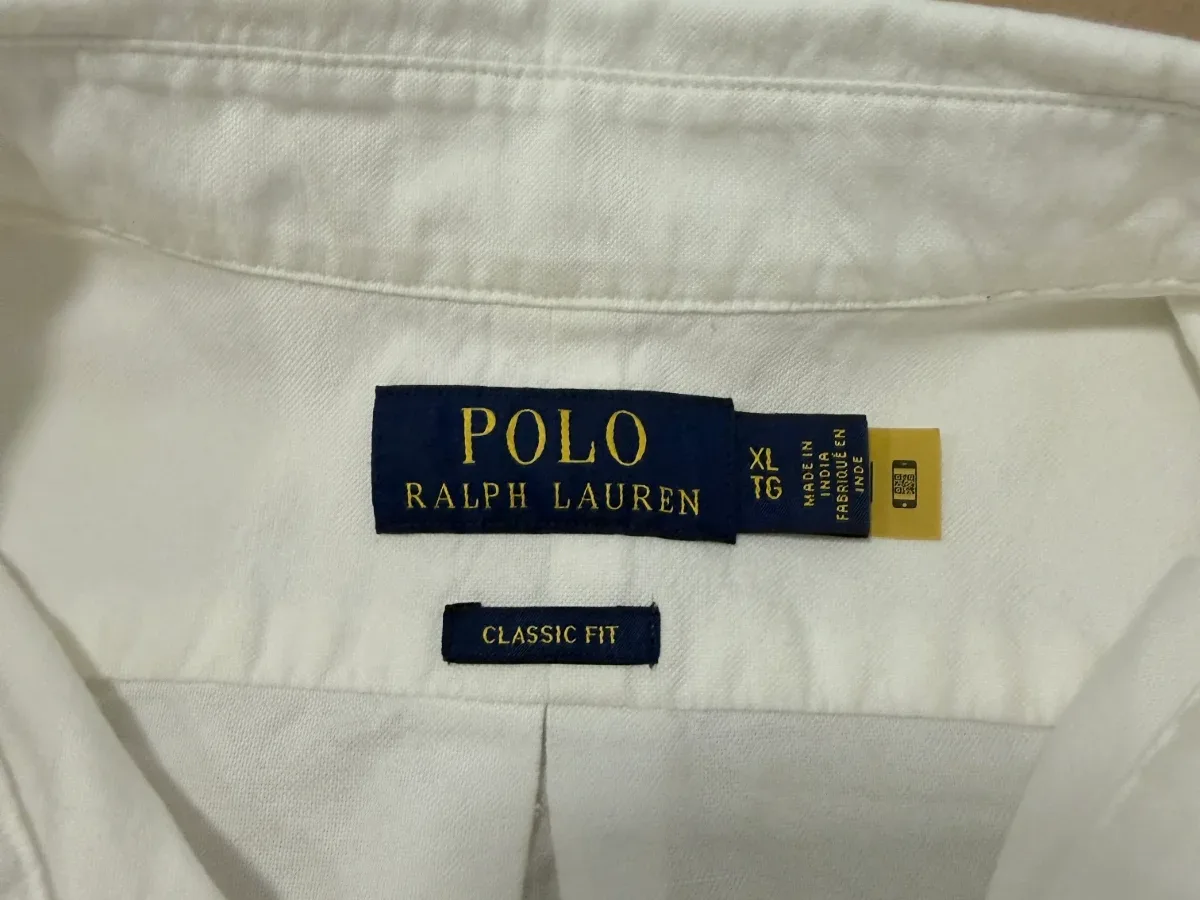
On older pieces the neck label usually reads Polo by Ralph Lauren, with the "by". Recent pieces read Polo Ralph Lauren, without it.
The change did not happen on one day or across every line at once, so the wording alone gives no year. It is a good pointer, though: a "by" suggests an older piece.
4. The line name
Over the years Ralph Lauren launched separate lines, each with its own label. The line doesn't tell you when a piece was made, but it tells you when it could not have been: a piece cannot be older than its line.
| Line | Since | What it is |
|---|---|---|
| Chaps | 1978 | The lower-priced line |
| Polo Western | 1979 | The Western collection |
| Polo Country | ~1984 | Mostly knitwear and outerwear, country style |
| Polo Sport | 1992 | The sport line; some branded pieces date from around 1990 |
| RRL | 1993 | Denim and workwear in an old American style |
| Polo Jeans Co. | 1996–2006 | The jeans line, with a US flag and RL in place of the stars |
| Big Pony | 2005 | The large pony on the chest |
The years are when each line appeared. Many carried on for years after, so the line gives you the earliest possible date, not the date itself.
What about a QR code?
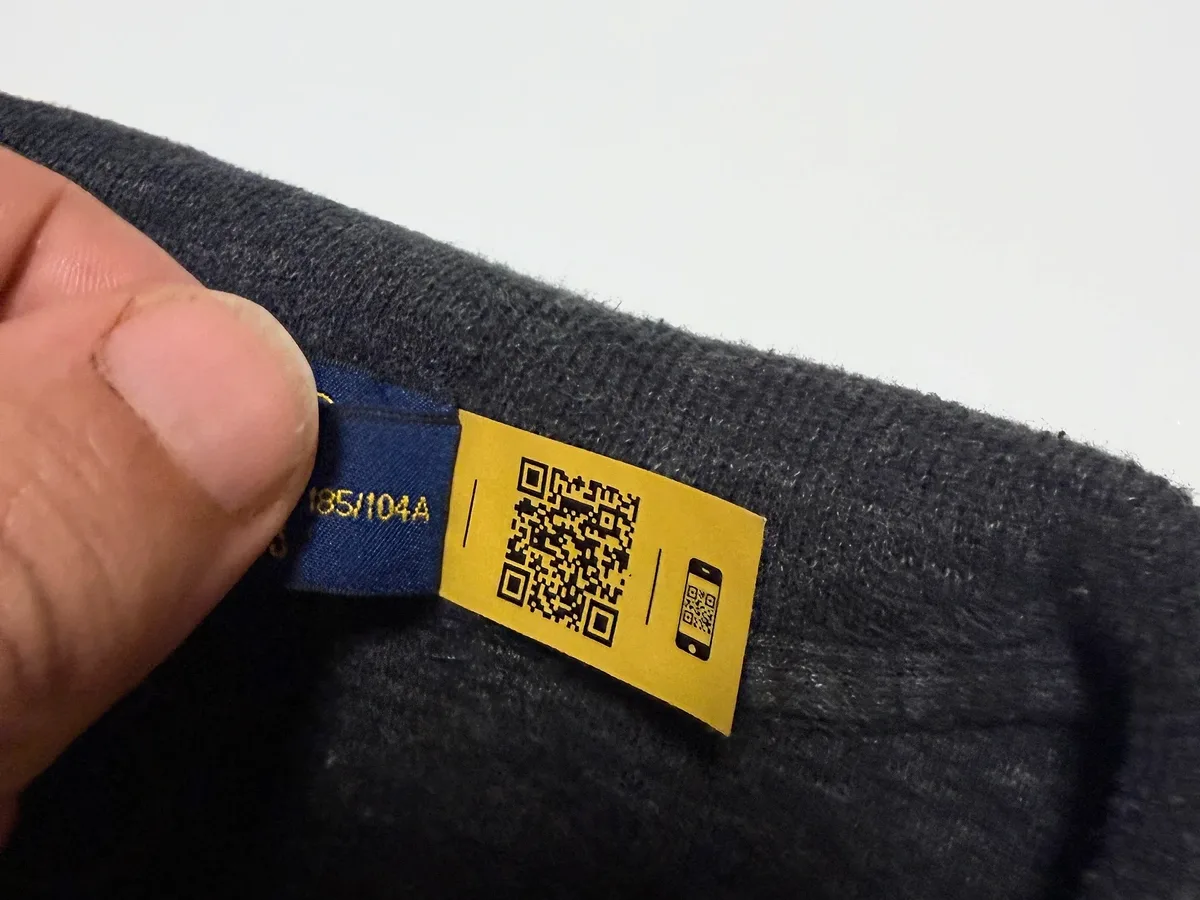
Since late 2019 new Polo pieces come with a QR code label you can scan to see the item's details. A piece with one is from 2019 or later, so from recent years. That is perfectly fine, and many of our pieces are like this: the label only tells you when a piece was made, not that it is any less good.
The scan itself, and what it says about authenticity, is covered in the authenticity guide.
In short: a thirty-second check
- Country of origin: USA or Hong Kong? A sign of an older piece.
- Care label: words only, or symbols only (1997 onwards)?
- Neck label: Polo by Ralph Lauren, or Polo Ralph Lauren?
- Line name: when did the line appear?
- QR code: if there is one, the piece is from 2019 or later.
Then go by the latest clue.